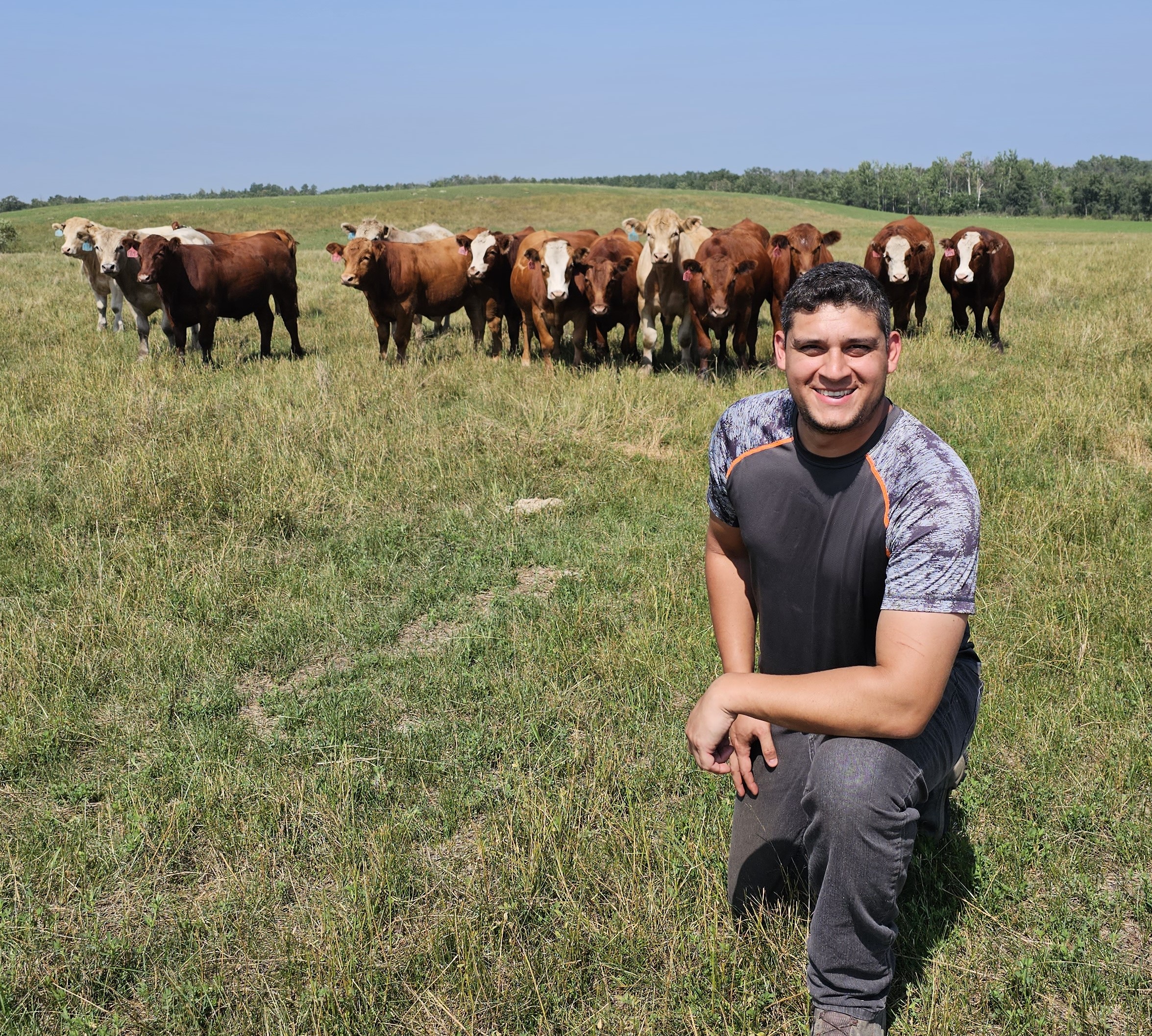
Cattle habitat selection in response to weather extremes within a native Aspen Parkland rangeland
Published in International Journal of Biometeorology, 2026
Recommended citation: Lopes, S.G., Novais, F.J., et al. Cattle habitat selection in response to weather extremes within a native Aspen Parkland rangeland. Int J Biometeorol 70, 178 (2026). https://doi.org/10.1007/s00484-026-03198-1
Abstract
Understanding cattle habitat selection, including in response to changes in weather conditions, is important for optimizing the use and conservation of pasture resources, as well as maintaining animal welfare. This study examined habitat preferences expressed by beef cattle while grazing during an usually warm summer growing season of 2021, and during a colder than normal period during the fall grazing season of 2022, within the Aspen Parkland, a vegetationally diverse transition zone between prairie grasslands and boreal forests in western Canada. Using GNSS tracking collars affixed to cattle, an advanced vegetation classification map, and weather data, we quantified cattle selection of five primary habitats during periods of normal and either high or low temperatures. Habitat selection was quantified using Ivlev’s Electivity Index (EI) between days of contrasting weather conditions, and during the summer, further stratified by different activity phases of the day, as determined in a prior study on cattle activity. During days of elevated heat (Temperature-Humidity Index, THI ≥ 68) in summer, cattle increased their occupancy of forests and reduced use of open shrubland. Further refinement of habitat use in response to hot conditions was evident throughout the day and night, with cattle most likely to rely on forests during peak temperatures from midday throughout the afternoon on days with increased heat, while sharply decreasing their use of open and sparsely wooded habitats. During days with increased cold (Wind Chill Index, WCI ≤ -7 °C) in fall, cattle reduced their use of open landscapes such as wetlands, grasslands and open shrublands, and instead selected forests and closed shrublands to a greater extent. These findings highlight the adaptive nature of cattle habitat use within native Aspen Parkland landscapes, including in response to changes in weather. The study provides key insights for understanding cattle biology, and associated cattle management requirements, emphasizing the need to maintain a diverse landscape structure that supports a variety of habitats to accommodate cattle requirements.